What to Pack for a Family Boat Day: A Calm Checklist for Parents
What to Pack for a Family Boat Day: A Calm Checklist for Parents
Introduction
A family boat day should feel calm and enjoyable.
Yet many trips begin with forgotten towels, missing sunscreen, hungry children, or a rushed drive to the marina. Small oversights on land become much bigger inconveniences once you’re out on the water.
This guide walks you through the entire day, from packing the evening before up to your return home, so everyone can spend less time worrying and more time enjoying the water.
Quick Answer
Want the printable version? Download the free Issuq Family Boat Day Checklist & Planner and tick everything off as you prepare.
The easiest way to prepare for a family boat day is to follow the day’s natural timeline.
- Pack bags the night before.
- Check the weather and boat conditions.
- Load the car before leaving home.
- Arrive at the marina with enough time.
- Keep children comfortable, hydrated and protected from the sun.
- Clean up before heading home.
Following a simple routine can make it easier to catch forgotten items before you leave.
The Night Before
Planning Makes Everything Easier
A smoother family boat day often starts the evening before. Packing while you have time to check everything properly can make the morning much easier.
Check the Latest Marine Weather Forecast
Before anything else:
- Wind speed and direction
- Rain and thunderstorm warnings
- Wave and sea conditions
- UV index
- Tide information (where relevant)
- Local boating notices
This is also a good time to confirm your planned route and expected return time.
Conditions can change quickly, especially around coastal areas.
Tip: Continue monitoring the weather and sea conditions throughout the day. Return early if conditions begin to deteriorate.
Charge Everything
Place electronics together in one location.
Remember to charge:
- Mobile phones
- Power banks
- Camera batteries
- Portable speakers
- Torches
- GPS devices if used
- Handheld VHF
Charging everything the night before avoids discovering a flat battery when you need a device later in the day.
Prepare the Cool Bag
One way to avoid stress is to prepare food the evening before.
Good options include:
- Sandwiches
- Wraps
- Pasta salad
- Fresh fruit
- Vegetable sticks
- Cheese
- Crackers
Frozen water bottles can provide an additional cold source and become drinking water as they thaw. Do not rely on them as the only way of keeping perishable food cold.
Keep perishable food at 40°F (4.4°C) or colder in an insulated cooler with sufficient ice, frozen gel packs or other suitable cold sources.
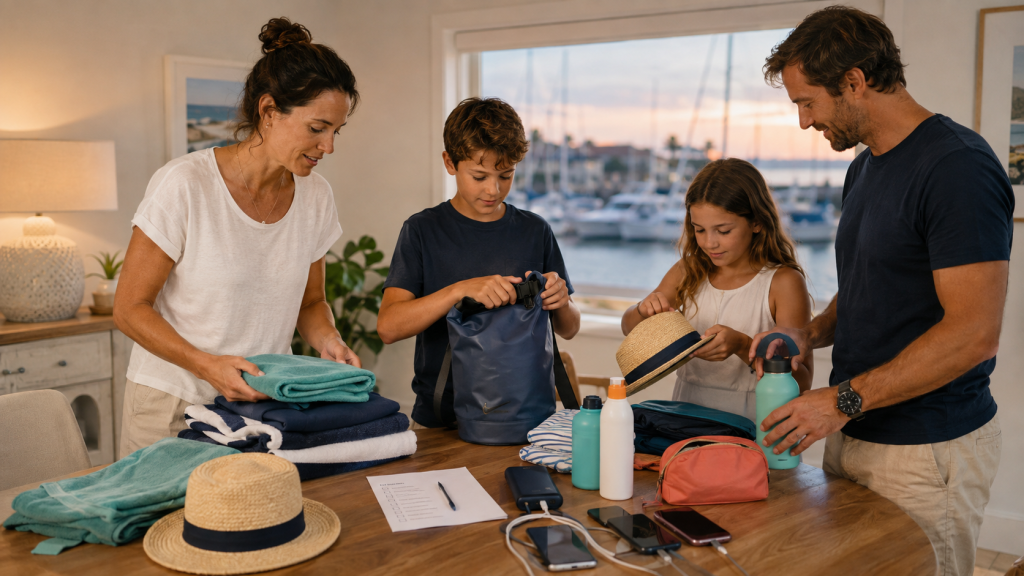
Lay Out Clothing
Prepare everyone’s clothing together.
Include:
- Swimwear
- Hat
- Sunglasses
- Light jacket
- Spare clothes
- Towels
A spare set of dry clothes can be particularly useful for children.
Illustrative image created using AI.
Before Leaving Home
The morning should feel calm and not rushed.
Before locking the front door, take five minutes for one final check.
Family Essentials
Make sure you have:
- Boat documents if required
- Wallet
- Keys
- Phone
- Medication
- Sunglasses
- Drinks
- Snacks
Sun Protection
Apply sunscreen before leaving home, following the product directions, so you’re not trying to do it while everyone is excited to board.
Remember:
- Broad-spectrum sunscreen
- Lip balm with SPF
- Wide-brimmed hats where practical
- Protective clothing, such as rash vests
Double Check the Cooler
Before leaving, confirm you packed:
- Drinking water
- Ice
- Lunch
- Snacks
- Baby food if needed
Keep perishable food in an insulated cooler with sufficient frozen packs or other cold sources. Keep the cooler shaded and closed as much as possible.
Pack enough drinking water for everyone, with extra for hot weather or unexpected delays.
At the Marina
This is exactly the kind of practical Issuq language that doesn’t need to pretend to be an official rule.
Before Boarding
Walk through a simple routine.
Check:
- Fuel and engine oil levels
- Required safety equipment
- A correctly fitted life jacket for every person
- Children’s life jackets appropriate for their size and weight
- Updated weather conditions
- Mooring lines
- Leave your planned route, vessel details, number of people aboard and expected return time with a reliable person ashore
- Confirm that the actual weather and sea conditions match the forecast, and reconsider departure if conditions appear unsafe
Life-jacket requirements vary by location, vessel and activity. Follow the applicable local rules and consider wearing a properly fitted life jacket whenever the boat is underway
Safety Briefing
Even young children benefit from simple instructions.
Explain:
- Where they should sit while the boat is moving
- When life jackets stay on
- Areas that are slippery
- Why hands and feet must remain inside while docking
- How to alert an adult immediately if something is wrong
- What to do if someone falls overboard
Keep the conversation calm and reassuring.
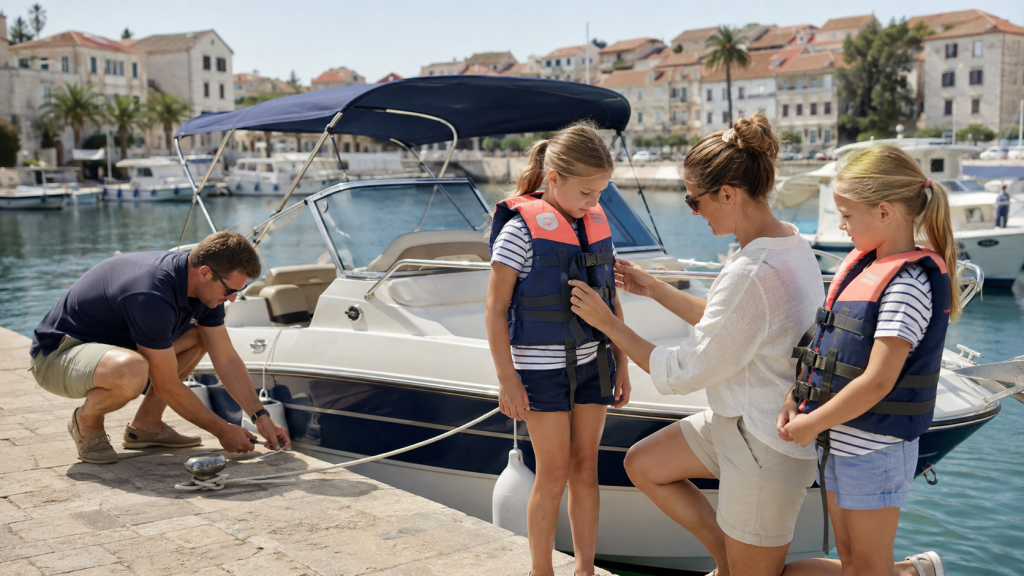
Illustrative image created using AI.
While on the Water
This is where the preparation pays off. Instead of searching through bags, everything should already have its place.
Keep Everyone Comfortable
Throughout the day remember to:
- Offer water regularly
- Reapply sunscreen at least every two hours and after swimming, sweating or towelling off, following the product instructions
- Encourage children to wear hats
- Keep snacks available
- Use available shade, particularly during periods of strong UV exposure
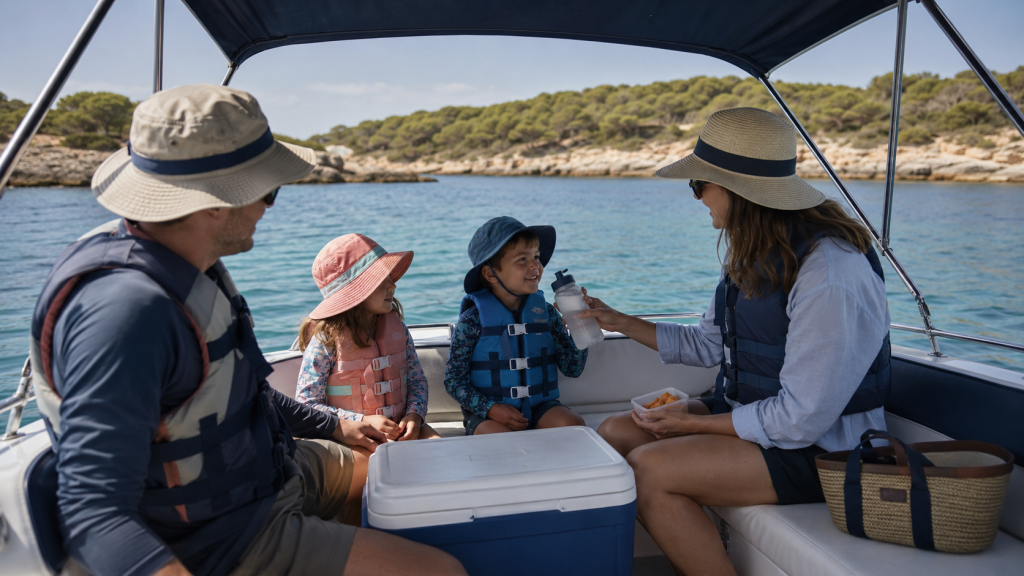
Illustrative image created using AI.
Before Swimming
Before anyone enters the water, make sure the boat is securely stopped, the engine and propeller are off, and a safe way to get back aboard. Children should remain under active adult supervision around the water. Follow local rules and the instructions of the person in charge of the vessel.
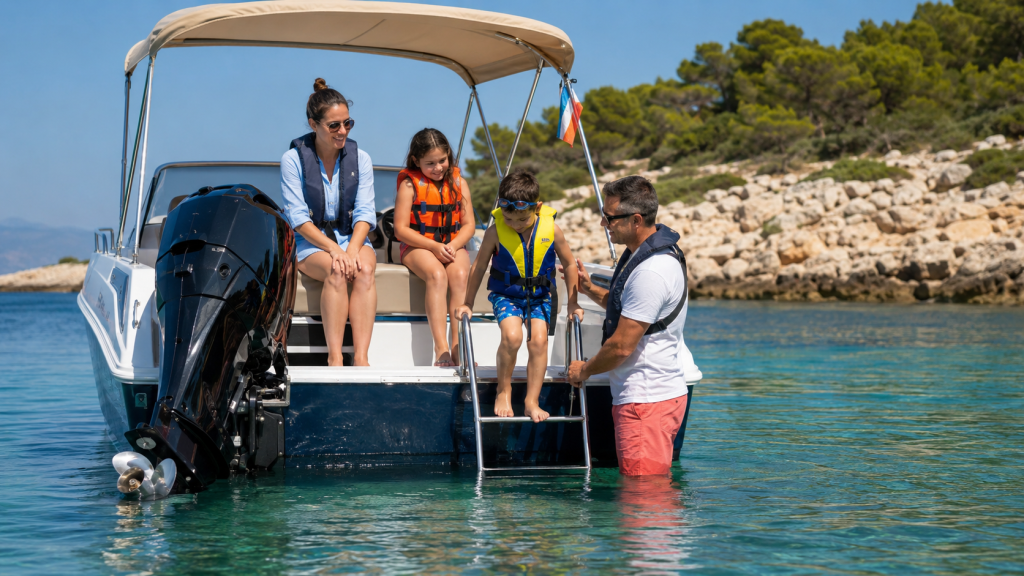
Illustrative image created using AI.
Create Family Moments
Once everyone is settled, keep the day simple.
Try:
- Spotting sea life
- Looking for different boats
- Swimming stops
- Simple card games
- Family photos
- Watching the sunset
Sometimes doing less creates the best day.
Heading Home
The day isn’t over when the engine stops.
A little organisation now makes the next trip much easier.
Before Leaving the Boat
Check every compartment.
Look for:
- Phones
- Wallets
- Sunglasses
- Towels
- Toys
- Chargers
A quick compartment check can save you discovering a missing phone, towel or toy after you’ve already left the marina.
Quick Clean-Up
Before driving away:
- Empty rubbish
- Remove leftover food
- Dry wet items
- Rinse equipment where possible
- Make a note of anything that needs replacing or restocking
Only keep perishable leftovers that have remained safely chilled. If the cooler has lost its ice or cold source and the food has not remained at a safe temperature, discard it.
Make Notes
Before you forget, make a quick note of anything you’d change for the next trip.
Write down:
- What you forgot
- What wasn’t needed
- Food everyone enjoyed
- Equipment that worked well
Every trip makes the next one easier.
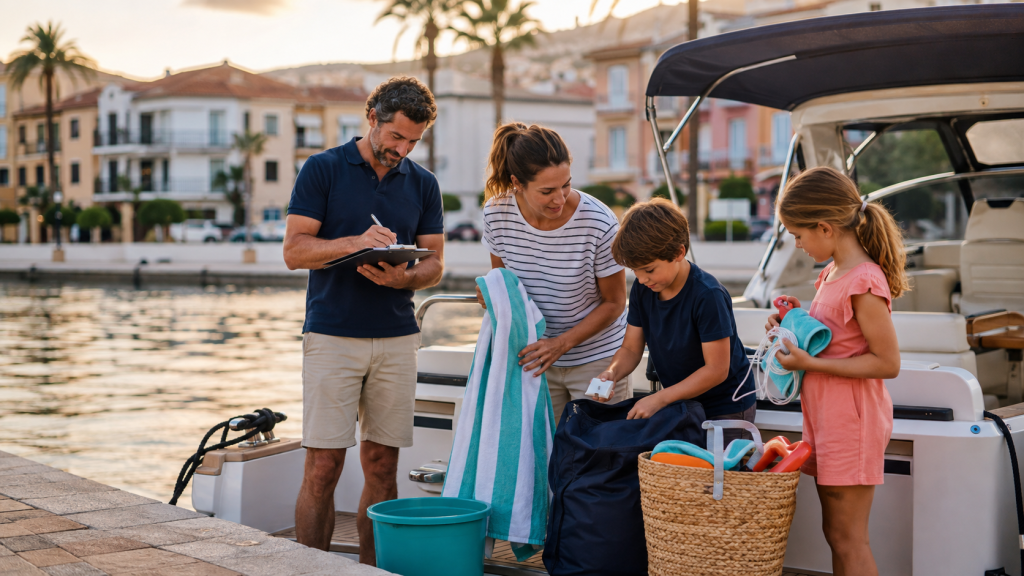
Illustrative image created using AI.
Practical Tips
- Keep an emergency dry bag ready but inspect its contents before every trip and replace expired, damaged or depleted items.
- Use sufficient frozen packs or other cold sources for perishable food. Frozen water bottles can be added as a supplementary cold source.
- Keep a permanent “boat box” stocked with wipes, spare hats, rubbish bags and other non-perishable essentials. Add sunscreen before each trip and protect it from excessive heat and direct sunlight.
- Keep one change of clothes in the car for the journey home.
- Never rely entirely on the weather forecast. Continue monitoring conditions throughout the day.
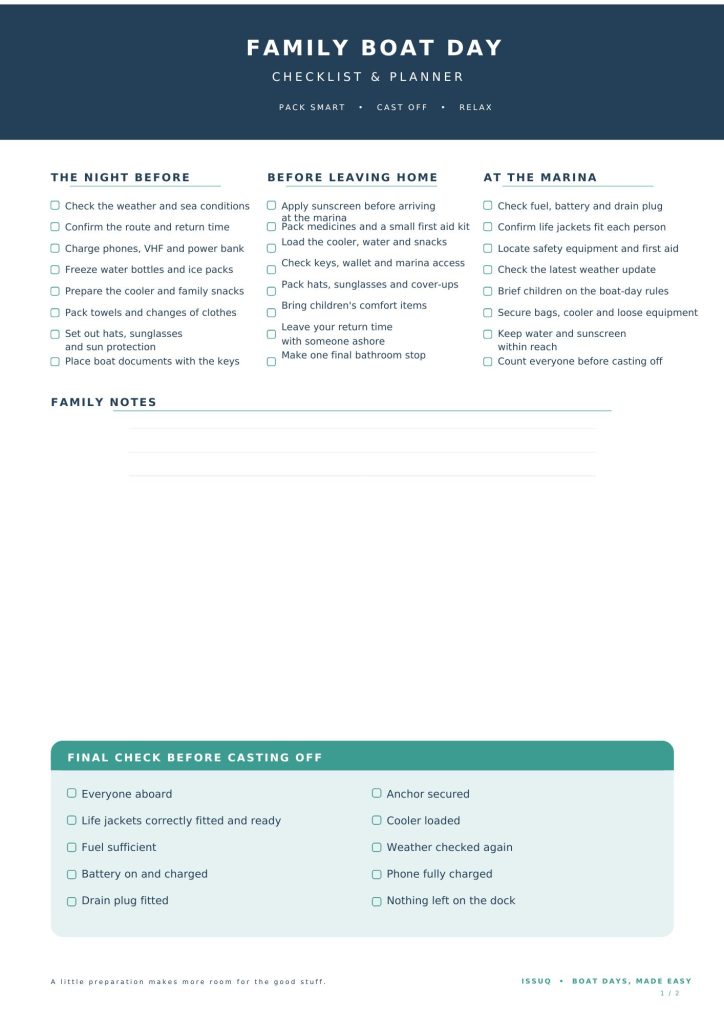
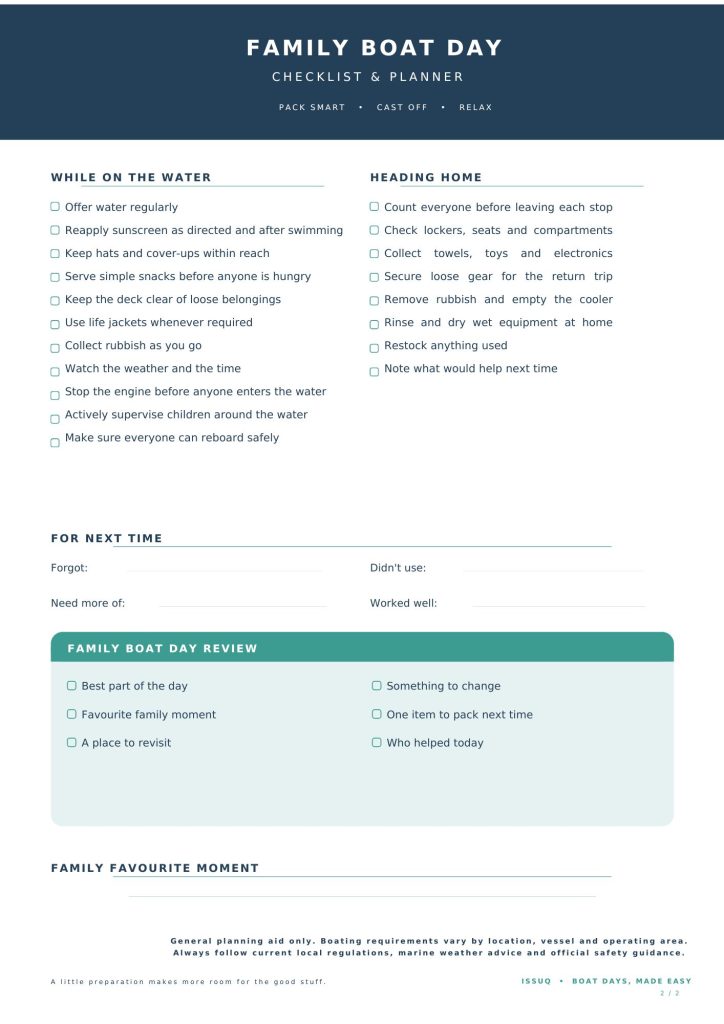
Download the Free Family Boat Day Checklist & Planner
Make packing easier with the free Issuq Family Boat Day Checklist. It follows the whole family boat day, from preparing the night before to packing up at the end of the trip.
Free printable PDF • A4 size • Instant download
Frequently Asked Questions
What items are easy to forget on a family boat day?
Small everyday items can be easy to overlook, including sunscreen, towels, hats, charging cables, medication, spare clothes and drinking water. Using the same checklist before every trip makes these items easier to catch before you leave.
How much water should we bring?
Pack enough drinking water for everyone for the planned trip, with extra for hot weather, physical activity or unexpected delays. Keep it somewhere easy to reach so everyone can drink regularly.
What food works best on a boat?
Choose foods that are easy to serve, store safely and eat without creating too much mess. Wraps, sandwiches, fruit, vegetable sticks, crackers and properly chilled pasta salads or cheese can work well. Keep foods that require refrigeration at 40°F (4.4°C) or colder.
How early should we arrive at the marina?
Allow enough time before your planned departure to park, load the boat, complete safety checks and settle everyone without rushing. Families with young children or more equipment may want to allow additional time.
Should children wear life jackets on a boat?
Children should have a properly fitted life jacket appropriate for their size and the activity. Requirements for when life jackets must be worn vary by location, vessel and activity, so check the rules that apply where you’re boating. As a general safety practice, consider having children wear properly fitted life jackets whenever the boat is underway.
Download the Free Printable
Want an easier way to prepare?
Download the free Issuq Family Boat Day Checklist & Planner for a simple packing list covering food, clothing, safety, sun protection and clean-up.
Editorial note: This guide has been reviewed and edited by Issuq. Information was checked against recognised boating, food and sun-safety guidance available at the time of publication. Requirements vary by location, vessel and operating area. Always follow local regulations, current marine weather advice and guidance from the relevant maritime authorities.
Last reviewed: 28 September 2026