Boat Food and Drink Checklist: What to Pack for a Small-Boat Day Trip
Food on a small boat has to survive heat, movement, limited cooler space and almost no preparation area. The best boat food is not simply tasty: it is easy to hold, easy to portion, resistant to spills and safe to keep until serving time.
This guide is designed for recreational day trips on small boats with limited refrigeration. It covers a typical half-day or full-day outing, not offshore provisioning or multi-day cruising. Always follow the rules of your boat operator, marina and local authority.
Quick boat food checklist
Save this section on your phone or print it before shopping. Adjust it for your route, weather, trip length, group size and available cooler space.
Water and drinks
☐ Drinking water, plus an emergency reserve
☐ Reusable bottles or securely capped individual bottles
☐ Electrolyte drinks for prolonged sweating or strenuous activity
☐ Juice, soft drinks or sparkling water as preferred
☐ Coffee or tea in a sealed insulated bottle
Meals and snacks
☐ Up to one portable meal per person for a half-day trip
☐ One or two portable meals per person for a full-day trip
☐ Two snack portions per person for a half day
☐ Three snack portions per person for a full day
☐ Whole fruit or chilled pre-cut fruit
☐ A protein option
☐ A vegetarian or vegan option where needed
☐ Clearly labelled allergy-sensitive meals kept separate
☐ Condiments in small sealed portions
Cooler and storage supplies
☐ Cooler thermometer
☐ Ice or frozen gel packs
☐ A separate drink cooler, if space permits
☐ Leakproof food containers
☐ Resealable bags for dry foods
☐ A separate bag or container for wet sandwich toppings
☐ Tray or contained serving area for oily foods
☐ Labels for allergy-sensitive meals
☐ Dry tote for crackers, napkins and serving supplies
Serving and cleanup
☐ Napkins and paper towels
☐ Cups or bottles with secure lids
☐ Reusable plates and utensils, if required
☐ Bottle or can opener, if required
☐ Potable water and soap for handwashing
☐ Hand sanitizer containing at least 60% alcohol as a backup
☐ Rubbish bags
☐ Container for safely chilled leftovers
Want a printable version? Download the free two-page Boat Food and Drink Checklist and tick everything off while you shop and pack.
How much food and water should you pack?
There is no responsible one-size-fits-all quantity. Heat, humidity, swimming, fishing, alcohol, age, medical needs and delays can change consumption substantially. Use the table as a shopping baseline, then add a sensible reserve. It is not medical guidance.
| People | Half-day meals | Half-day snacks | Full-day meals and snacks |
| 2 | 2 meal portions | 4 snack portions | 4 meal portions + 6 snacks |
| 4 | 4 meal portions | 8 snack portions | 8 meal portions + 12 snacks |
| 6 | 6 meal portions | 12 snack portions | 12 meal portions + 18 snacks |
Full-day totals allow for up to two meal portions per person. Reduce the quantity if everyone eats before departure or the boat returns before the second planned meal.
A practical water-planning baseline
For light recreational activity, approximately 1–1.5 litres—about 1–1½ quarts—per person for a half-day trip, and 2–3 litres—about 2–3 quarts—for a full-day trip can be used as an initial packing estimate. Carry additional immediately drinkable water for hot conditions, physical activity, individual needs and unexpected delays. These figures are not intake targets or limits.
| Plan conservatively: If the weather is hotter, the trip is more active or access to drinking water is uncertain, carry more than the baseline. People with medical conditions or fluid restrictions should follow their clinician’s advice. |
Best food to bring on a boat
Illustrative image created using AI.
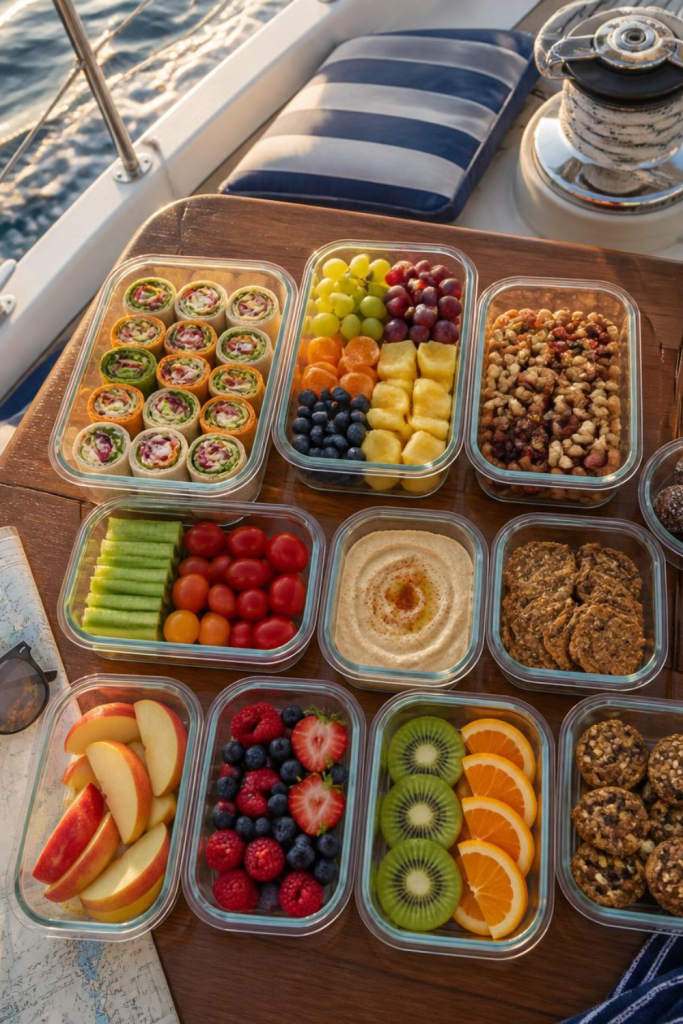
Choose foods that can be portioned before departure, eaten with one hand where practical and stored without crushing or leaking. A balanced selection normally includes one or two filling meal portions per person, depending on the trip length, plus a protein source, fruit or vegetables and compact snacks.
Portable meals
- Wraps or sturdy rolls with fillings packed to avoid excess moisture
- Pre-portioned pasta, couscous or grain salads kept properly chilled
- Cooked protein portions in sealed individual portions
- Bean, hummus or roasted-vegetable wraps
- Cheese, crackers and whole fruit
- Pre-portioned sandwiches with wet toppings added at serving time
Shelf-stable snacks
- Nuts or trail mix, when allergies permit
- Pretzels or crackers
- Jerky or shelf-stable meat snacks
- Dried fruit
- Granola or protein bars that will not melt
- Whole apples, oranges or bananas protected from crushing
Chilled snacks
- Hard cheese or cheese sticks
- Hard-boiled eggs
- Yogurt pouches or cups
- Hummus with pre-cut vegetables
- Grapes, melon or other pre-cut fruit
- Cooked protein portions
Eggs, dairy products, cooked meats, hummus and cut produce are perishable. Keep them at 40°F/4°C or below until serving.
Kid-friendly choices
- Small sandwiches or wraps
- Crackers and cheese
- Fruit pouches or chilled fruit cups
- Pre-portioned familiar snacks
- Water in easy-to-close bottles
- Allergy-sensitive foods confirmed with the child’s parent or guardian
Avoid introducing unfamiliar foods on the boat, and consider choking risk, age and supervision when choosing bite sizes.
Vegetarian, vegan and allergy-sensitive substitutions
| Instead of | Try | Storage note |
| Deli-meat wrap | Bean or roasted-vegetable wrap | Keep chilled if it contains cooked grains, cut produce or spread |
| Cheese snack | Shelf-stable roasted chickpeas | Keep dry and sealed |
| Yogurt | Suitable plant-based yogurt | Keep chilled unless the label says otherwise |
| Mixed communal snacks | Individually labelled portions | Reduce cross-contact; follow the guest’s own allergy plan |
Drinks to bring on a boat
Water first
Make drinking water the largest part of the beverage plan. Keep some bottles accessible rather than burying all of them under food. Frozen water bottles can supplement ice packs and become reserve drinks as they thaw, but do not rely on them as the only immediately drinkable supply.
Electrolyte drinks
Electrolyte drinks may be useful when people are sweating for several hours. Water should remain the main drink for most light day trips.
Soft drinks, juice, coffee and mocktails
Choose containers that close securely and fit the cooler. Keep coffee or tea in insulated bottles. For a simple mocktail, pack sparkling water and fruit separately, then combine them when serving rather than transporting an open pitcher.
Alcohol
Alcohol rules differ by jurisdiction, marina, rental company and charter operator. Check all applicable rules before departure. Never operate a vessel while impaired; the U.S. Coast Guard recommends boating sober, and alcohol also increases risk for passengers. Designate a qualified sober operator and provide appealing non-alcoholic choices.
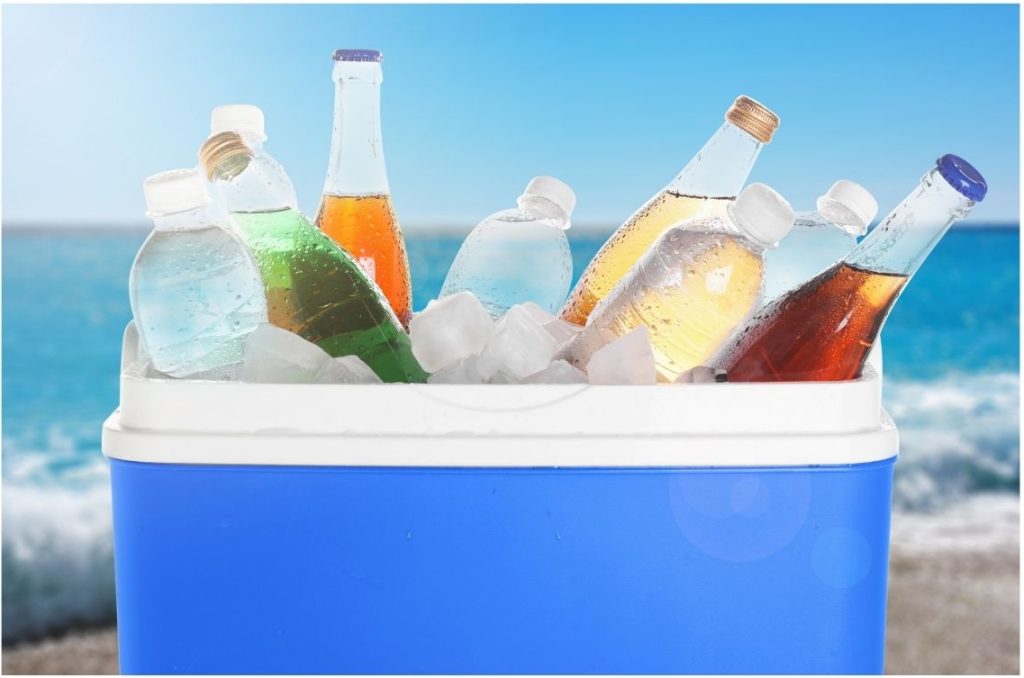
Foods and drinks to avoid or pack differently
| Problem | Examples | Better approach |
| Melting | Chocolate; soft-frosted desserts | Choose heat-stable snacks or keep them deeply chilled |
| Sogginess | Pre-dressed salads; subs with tomatoes and sauce | Keep wet ingredients separate until serving |
| Spills | Open cups; runny dips; large serving bowls | Use lidded portions and a stable tray |
| Staining | Red drinks; berries; dark sauces | Confirm boat rules and use sealed portions |
| Oil marks | Olives; sun-dried tomatoes; oily antipasti | Drain, seal and serve over a contained surface |
| Unsafe holding | Dairy, eggs or meat without adequate cooling | Use enough cold source and verify temperature |
| Difficult prep | Foods requiring chopping or assembly underway | Complete all cutting and most preparation on land. Keep only simple additions, such as wet sandwich toppings, separate. |
| Waste | Individually wrapped items with loose packaging | Consolidate portions where allergy and hygiene needs allow |
Glass policies are not universal. Check the rules for your vessel, launch site, marina, beach and rental or charter operator. When glass is prohibited or impractical, use cans or durable reusable containers.
How to pack a boat cooler
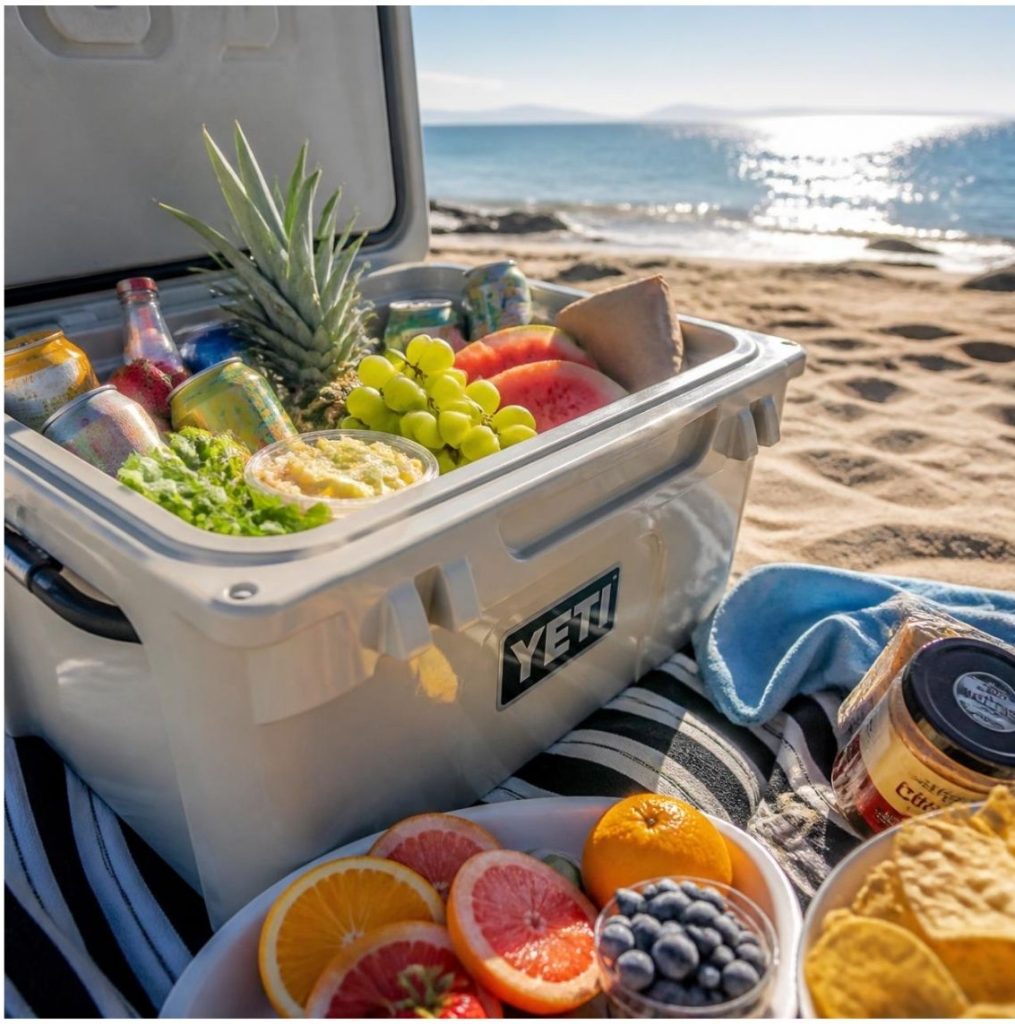
Illustrative image created using AI.
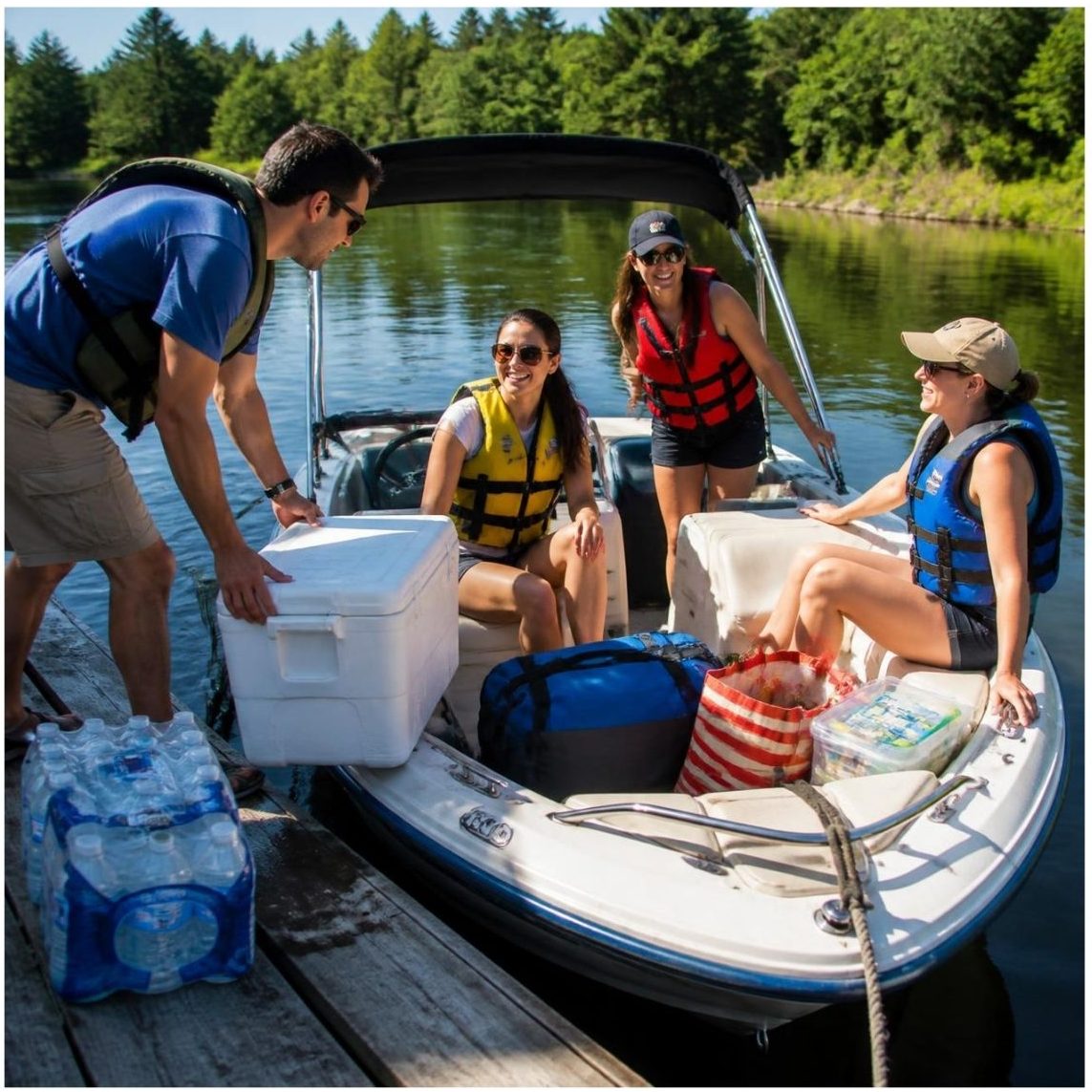
- Pre-chill everything. A cooler should preserve cold food, not cool warm food from scratch.
- Use sufficient cold sources. Add ice, frozen gel packs or another cold source and verify that perishable food remains at 40°F/4°C or below.
- Seal the food. Use leakproof containers so meltwater cannot soak sandwiches or contaminate food.
- Separate by use. Put drinks in a second cooler when possible because the drink cooler is opened more often.
- Protect ready-to-eat food. Keep ready-to-eat food protected in sealed containers and return perishables to the cooler promptly after serving.
- Keep the cooler shaded. Limit unnecessary opening so the cooler can maintain a safe temperature.
- Check the thermometer. Do not judge safety by whether the cooler merely feels cold.
Food-safety checklist
☐ Keep cold perishable food at 40°F/4°C or below.
☐ Discard perishable food left out for more than two hours, or more than one hour when the air temperature is above 90°F/32°C.
☐ Use clean running water and soap before preparing or eating food when practical.
☐ If soap and water are unavailable, use hand sanitizer containing at least 60% alcohol; it is less effective on visibly dirty or greasy hands.
☐ Only keep leftovers that remained within safe time and temperature limits.
☐ Follow package instructions and stricter local health guidance where applicable.
The final five-minute check
☐ Everyone has enough immediately drinkable water
☐ Perishables are at 40°F/4°C or below
☐ Wet and oily ingredients are sealed separately
☐ Allergy-sensitive meals are labelled and separated
☐ Rubbish bags, hand-cleaning supplies and a bottle opener are aboard
☐ The vessel operator’s food, glass and alcohol rules have been checked
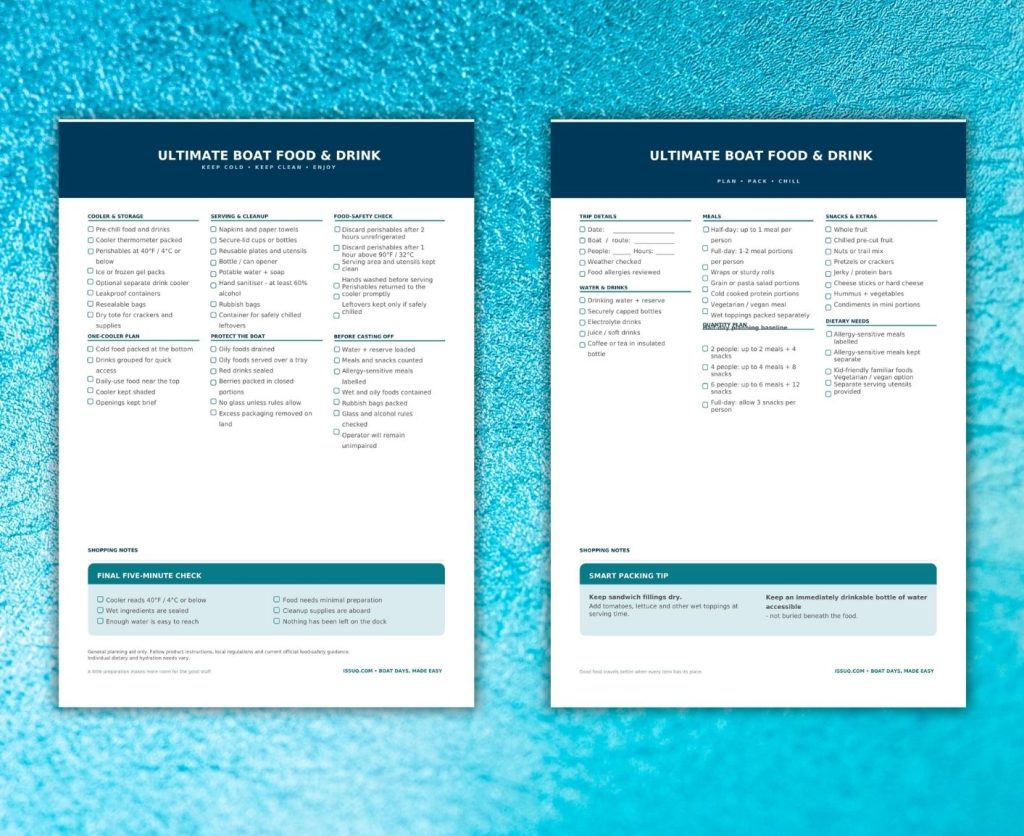
Download the Free Boat Food and Drink Checklist
Use the free Issuq printable to plan meals, drinks, cooler supplies and cleanup essentials before your next day on the water.
Free printable PDF • A4 size • Instant download
Frequently asked questions
How much water should I bring per person?
As a practical starting point for light activity, pack about 1–1.5 litres (1–1½ quarts) per person for a half day or 2–3 litres (2–3 quarts) for a full day, plus reserve water. Increase the supply for heat, exertion, delays and individual needs. Do not ration water to make an inadequate supply last.
Which foods can be packed in a properly chilled cooler?
Properly chilled wraps, pasta or grain salads, hard cheese, eggs, yogurt, cooked protein portions, hummus and cut fruit can travel in a cooler maintained at 40°F/4°C or below.
What boat food does not require refrigeration?
Nuts, dried fruit, crackers, jerky, suitable bars and whole uncut fruit are convenient shelf-stable choices. Always follow the product label.
How do I stop sandwiches from becoming soggy?
Pack tomatoes, pickles, lettuce, sauces and other wet ingredients separately. Add them just before eating and keep perishable fillings properly chilled.
How do I keep food cold all day?
Pre-chill the food, use adequate ice or frozen gel packs, keep the cooler shaded, minimize opening and verify a temperature of 40°F/4°C or below with a thermometer.
Sources and official guidance
FoodSafety.gov cooler guidance
US Coast Guard boating-under-the-influence guidance
Make Boat-Day Food Simpler
The best boat food does not need to be elaborate. Pack familiar food, portion it before departure, protect it from heat and spills, and carry more immediately drinkable water than you expect to need. A little preparation on land makes serving and cleaning up much easier on the water.
Editorial note: This guide has been reviewed and edited by Issuq. Food-safety and hydration information was checked against recognised official guidance available at the time of review. Individual needs and boating requirements vary. Always follow product instructions, local regulations and advice from qualified health professionals where relevant.
Last reviewed: 30 August 2026