
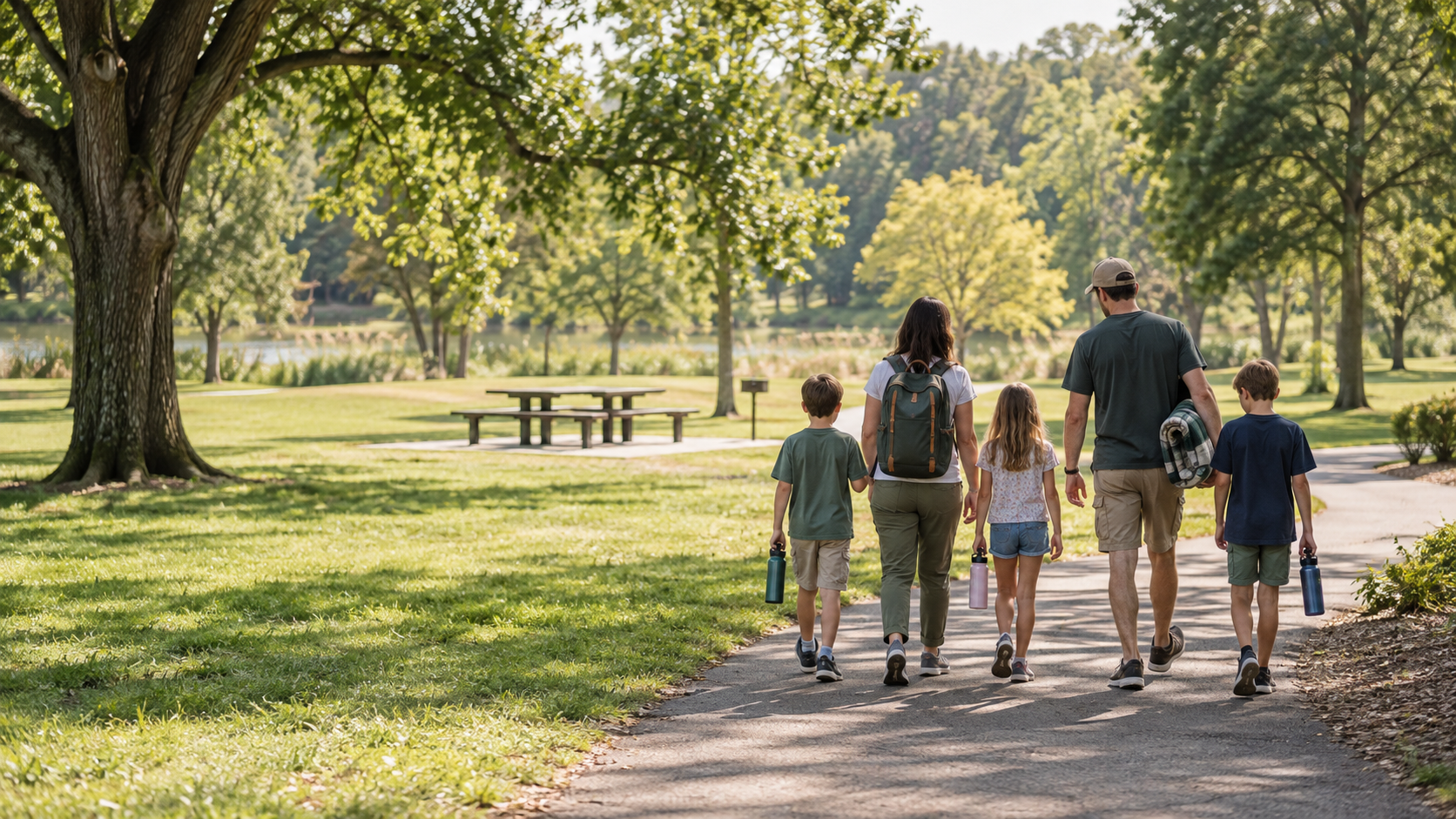
Outdoor Day Packing List for Families: What to Bring
Most family days outdoors are disrupted by small things: an empty water bottle, hungry children before lunch, forgotten sunscreen or a sudden chill with no spare layer in reach. The solution is not to pack for every possible scenario.
For an ordinary visit to a park, nature preserve, lakeside or outdoor attraction, a small number of well-chosen items will cover most needs. This guide is for everyday family outings, not hiking, camping or remote trips. Pack what you will genuinely use, adjust for the weather and venue, and let the car hold the bulky backups when it remains within easy reach.
Quick Answer: The Core Day-Bag List
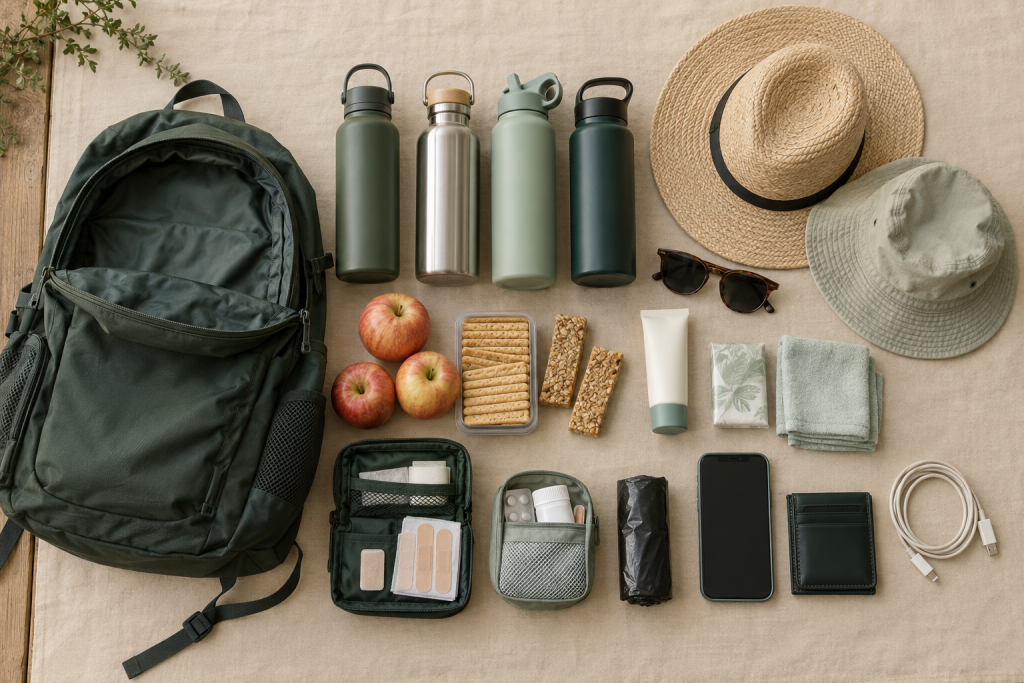
- Water for everyone
- Easy snacks
- Essential medication
- Phone, payment, and ID
- Sunscreen and hats
- Tissues or wipes
- A small trash bag
- A compact first-aid pouch
From there, check the forecast, venue, and trip length. A rain layer, bug spray, a change of clothes, a small cooler, or a power bank might help, but none belong in every bag. Extra water, towels, dry shoes, and full clothing changes can usually stay in the car, ready if needed without weighing down whoever’s carrying the day bag.
Five Things to Check Before You Pack
1. How long will you be out? A two-hour visit needs far less than a full day. Scale food, water, and phone power to the actual time away rather than over-preparing by default.
2. What facilities does the venue have? Check the official website (not an old review) for toilets, water refill stations, shade, picnic tables, food vendors, and trash cans. If you can refill bottles, you may not need to carry a full day’s water. No tables? Bring a blanket. Knowing what’s provided keeps you from carrying things that never leave the bag.
3. Are there rules or restrictions? Confirm hours, parking, tickets, and policies on dogs, outside food, coolers, and chairs. Better to know in advance than to arrive with something that isn’t allowed.
4. What’s the weather actually doing? Look past the temperature; before you leave, check rain chances, UV index, wind, and storm warnings for later in the day. If severe weather is likely, shortening or relocating the trip is smarter than packing more gear.
5. How far will you be from the car? The car is only a useful backup if it’s reachable. At a small local park, spare clothes and towels can stay in the trunk. If you’ll be walking far from parking, bring what you’d genuinely need before returning.
Free Outdoor Day Packing Checklist
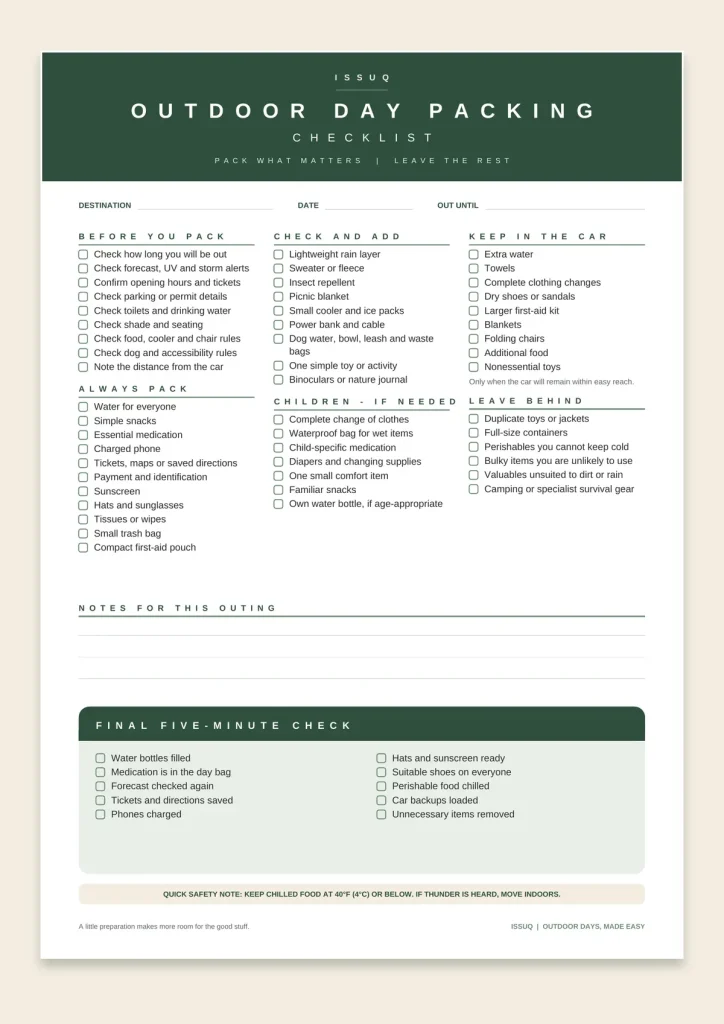
Prefer a printable list? Download the free A4 Outdoor Day Packing Checklist and tick off what to carry, what to add for the conditions and what can stay in the car.
The Essentials Worth Carrying
Water: Give everyone a refillable bottle and check refill access. Needs vary by heat, activity, age, health, and trip length; pack more for hot or active days, and keep a backup supply in the car if it stays nearby.
Snacks: Keep it simple: whole fruit, crackers, dried fruit, cereal bars. Low mess, low prep, and pack food your family will actually eat rather than “healthy” snacks that go untouched.
Medication: Prescription drugs, inhalers, allergy medicine, or an epinephrine auto-injector should be packed first and kept accessible. Check storage requirements; some medications shouldn’t sit in a hot car even when other items can.
Phone, payment, ID: Your phone likely holds directions, tickets, and emergency contacts. Download maps in advance for spotty coverage, and screenshot tickets and parking info. Bring a card and some cash; add a power bank only for long days or phone dependent visits.
Sun protection: Sunscreen works best paired with hats, sunglasses, and shade breaks. Bring it along for reapplication rather than leaving it in the bag unused.
Tissues, wipes, trash bag: One pack of tissues or wipes handles sticky hands and underprepared restrooms. A small trash bag matters since bins may be full, far away, or nonexistent and food scraps shouldn’t be left for wildlife.
First-aid pouch: A small kit with bandages, blister pads, antiseptic wipes, gloves and tweezers can help with minor cuts, blisters and splinters. Add personal supplies as needed, but carry only items you know how to use. Add personal supplies as needed, but stick to items you actually know how to use.
Perishable food: If you bring sandwiches containing meat, eggs or dairy products, use an insulated bag or cooler with sufficient ice or frozen gel packs to keep them at 40°F/4°C or below. Keep the bag or cooler shaded and closed as much as possible, and return perishable food promptly after serving.
Weather Conditions to Plan Around
Heat and sun: Regular drinks, shade breaks, hats, and light clothing help. Watch for signs of overheating, including weakness, dizziness, headache, nausea or unusually heavy sweating. Know when to end the outing and seek medical help.
Insects and ticks: Repellent isn’t needed everywhere; it matters most near woods, tall grass, marshes, and lakes. Apply per the label, dress appropriately for the terrain, and check for ticks after time in risky areas.
Rain and cold: One lightweight rain layer per person usually beats multiple clothing changes. Add a sweater or fleece if temperatures might drop or the venue is windy or shaded. Know when to simply leave; thunderstorms, extreme heat, and high winds aren’t solved by clothing.
Extra Items for Kids
Children find mud, water, and mess adults miss, but that doesn’t require a second bag. Useful additions depending on age and activity:
- A full change of clothes
- A waterproof bag for wet or dirty items
- Child-specific medication
- Diapers and changing supplies
- One comfort item or small activity
- Snacks you know they’ll eat
Older kids can carry their own water and light items, sharing the load and building some responsibility.
Situational Add-Ons
| Add this | When it helps |
|---|---|
| Rain layer | Rain possible or exposed area |
| Sweater/fleece | Cool or windy conditions |
| Insect repellent | Grassy, wooded, marshy, or bug-prone areas |
| Picnic blanket | Limited or damp seating |
| Small cooler | Carrying perishables |
| Power bank | Long day or phone-dependent |
| Spare clothes | Water, mud, or young kids involved |
| Dog supplies | Dogs are coming along |
| Binoculars/journal | Planned nature activity |
| One outdoor toy | Space and time to use it |
What Can Stay in the Car
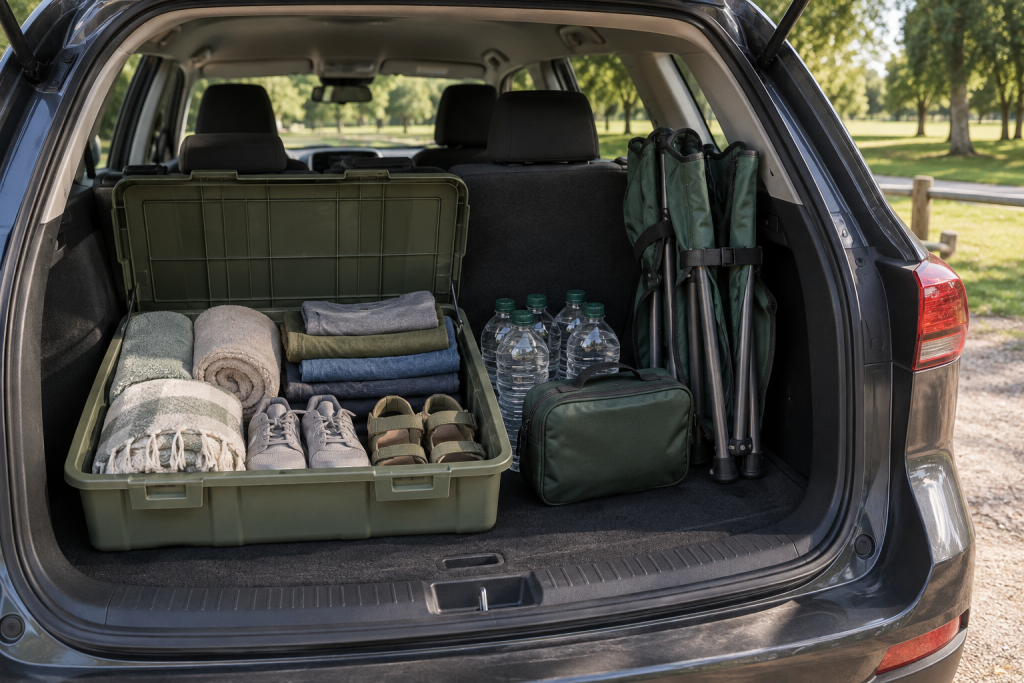
Good backups that do not need to be carried include extra water, towels, full clothing changes, dry shoes, a larger first-aid kit, blankets, folding chairs, extra food and unused toys.
Never leave children or pets unattended in a parked car. Keep heat-sensitive medication with you, and remember that car backups are only useful when the vehicle remains within easy reach.
What Not to Pack
Overpacking creeps in gradually; one more jacket, another toy, a full-size wipes pack, an oversized cooler until someone’s hauling a heavy bag nobody actually uses. Skip: duplicate toys or hygiene items, full-size containers when smaller works, perishables you can’t chill, oversized coolers or chairs you won’t use, valuables you’ll worry about, and camping or survival gear. (Remote trips without nearby facilities need a different, hiking-specific list.)
The Five-Minute Final Check
Before leaving, confirm: water bottles are filled, medication is actually in the bag, tickets and directions are saved, you’ve checked the latest forecast, everyone has suitable shoes, sunscreen and hats are ready, perishables are chilled, backup items are really in the car, and nothing unnecessary is weighing down the bag.
Take the Checklist With You
The printable Outdoor Day Packing Checklist brings the whole guide together on one easy-to-use page. It covers what to carry, what to add for the conditions and what can stay in the car, plus a quick check before you leave.
Included:
- Core day-bag essentials
- Weather and venue-dependent items
- Children’s extras
- Useful car backups
- A final check before leaving
Format: A4 PDF
Printing: Print at 100% or choose “Fit to page” in your printer settings.
This checklist is intended for ordinary family visits to parks, nature preserves, lakesides and outdoor attractions. Hiking, camping and remote trips require additional preparation.
FAQ Highlights
Most important items:
Water, snacks, medication, phone, payment, ID, sun protection, wipes, trash bag, first-aid pouch, everything else depends on weather, venue, and duration.
How much water:
No fixed amount; it depends on conditions, activity, and group needs; keep extra in the car if accessible.
First-aid kit needed?
A small pouch usually suffices; personal medication matters more than kit size.
Two-hour outing:
Water, medication, phone, payment, sun protection, and basic hygiene/first-aid items may be enough.
Cooler needed?
Only if carrying perishable food, shelf-stable snacks are simpler for short trips.
Poor mobile coverage:
Download maps and screenshot tickets/directions beforehand; bring a power bank if the phone is essential.
Bottom line: Preparedness doesn’t mean packing for every possibility. Check the venue and forecast, think realistically about the day’s length, keep essentials within reach, and leave the rest in the car, a lighter bag means more energy for the outing itself.
Editorial note: This guide has been reviewed and edited by Issuq. Weather, heat, food-safety and outdoor-health information was checked against recognised official guidance available at the time of review. Venue rules, weather conditions and individual needs vary.
Last reviewed: 18 September 2026